The Great Unification: How New Wireless Standards Are Finally Bridging the Android and iOS Divide
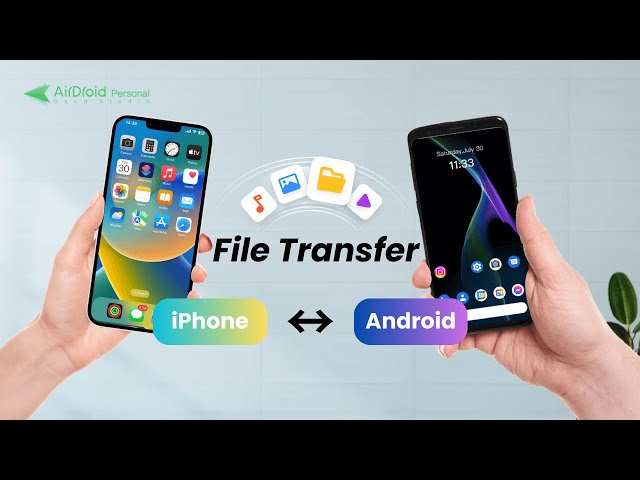
For over a decade, the smartphone market has been defined by a binary choice: the open ecosystem of Android versus the infamous “walled garden” of iOS. While Android phones have long touted flexibility and interoperability, they often faced a social and technical barrier when interacting with Apple devices. The most palpable pain point has arguably been file sharing. While Android users enjoyed seamless transfer protocols among themselves—evolving from Android Beam to Nearby Share and now Quick Share—sending a high-quality video or a batch of photos to an iPhone user was a exercise in frustration, usually involving compression-heavy messaging apps or cloud links.
However, the landscape of mobile technology is undergoing a seismic shift. We are currently witnessing a pivotal moment in Android news, driven not merely by technological innovation, but by a global push for standardization. Recent developments in wireless communication protocols are dismantling the walls that once separated these operating systems. By forcing the adoption of universal Wi-Fi standards, the industry is moving toward a future where Android gadgets can natively communicate with their iOS counterparts. This article delves deep into the technical underpinnings of this shift, the regulatory forces at play, and what this newfound interoperability means for the future of mobile computing.
Section 1: The Technical Breakdown of Cross-Platform Discovery
To understand the magnitude of this change, we must first understand the technology that created the divide. For years, Apple’s AirDrop utilized a proprietary implementation of Wi-Fi and Bluetooth technologies. While the hardware was standard, the “handshake” protocol—specifically Apple Wireless Direct Link (AWDL)—was a closed language. Android phones, despite having the same Wi-Fi chips, could not “speak” this language without third-party apps that were often clunky and unreliable.
From Proprietary to Neighbor Awareness Networking (NAN)
The breakthrough lies in the adoption of Neighbor Awareness Networking (NAN), also commercially known as Wi-Fi Aware. This is a standard developed by the Wi-Fi Alliance. Unlike traditional Wi-Fi, which requires a central access point (a router), Wi-Fi Aware allows devices to discover and communicate with one another directly, continuously, and in the background, without draining the battery significantly.
Android gadgets have supported these open standards for years. The recent shift involves Apple being compelled to support these non-proprietary standards for device discovery. When both ecosystems utilize the same standardized frequency and discovery protocol, the hardware can finally acknowledge the existence of a device from the “opposing” camp. This creates a bridge where a Pixel 9 can theoretically appear on the share sheet of an iPhone 16, and vice versa.
The Role of Wi-Fi Direct and Bluetooth LE
The mechanics of modern high-speed file sharing involve a two-step dance. First, Bluetooth Low Energy (BLE) is typically used for the initial “handshake” or discovery because it is extremely power-efficient. It says, “I am here, and I have a file.” Once the connection is accepted, the devices negotiate a Wi-Fi Direct connection. This creates a high-bandwidth, peer-to-peer tunnel capable of transferring gigabytes of data in seconds.
Previously, the incompatibility lay in how that Wi-Fi Direct connection was negotiated. With the standardization of these protocols, Android phones can now negotiate that tunnel using a universal language rather than a proprietary dialect. This harmonization is the technical foundation that allows for true cross-platform interoperability without the need for internet connectivity or cloud intermediaries.
Section 2: The Regulatory Catalyst and Market Impact
While engineers build the bridges, it is often regulation that opens the gates. The current wave of Android news is heavily influenced by the regulatory environment in Europe. The European Union’s Digital Markets Act (DMA) has been a sledgehammer against anti-competitive practices, specifically targeting “gatekeepers” who lock users into a single ecosystem.
Standardization as a Consumer Right
We saw the first major victory for standardization with the universal adoption of USB-C. Apple’s transition to USB-C on the iPhone was a direct result of EU mandates, a move that significantly benefited Android gadgets users who could finally share chargers with their iOS-using friends. The push for interoperable messaging (RCS) was the second domino. Now, we are seeing the third pillar: wireless interoperability.
The logic is simple: if a company controls a dominant market position, they cannot artificially degrade the experience of communicating with competing devices. By requiring the adoption of industry-standard Wi-Fi protocols rather than proprietary locks, regulators are ensuring that a consumer’s choice of smartphone does not punish them socially or professionally.
The “Green Bubble” Effect on Hardware
This shift goes beyond just software; it validates the hardware choices of Android manufacturers. For years, Samsung, Google, and OnePlus have built incredible hardware that was often dismissed by general consumers solely because of ecosystem friction. “I can’t get an Android; I won’t be able to AirDrop photos to my spouse,” was a common refrain.
By removing this friction, the meritocracy of the hardware returns. Consumers can now judge Android phones based on their camera quality, screen refresh rates, AI capabilities, and form factors (like foldables), rather than being held hostage by a file transfer protocol. This levels the playing field and forces all manufacturers to compete on innovation rather than lock-in.
Section 3: Real-World Scenarios and Implications
The theoretical ability to share files is one thing; the practical application in daily life is where the true value lies. The integration of standardized sharing protocols transforms how we use Android gadgets in mixed-device environments.
Scenario A: The Content Creator Workflow
Consider a content creator who uses a Samsung Galaxy S24 Ultra for its superior zoom lens but edits on an iPad Pro due to specific software preferences. Previously, moving 4K video files between these devices was a nightmare involving cables, SSDs, or slow cloud uploads. With standardized Wi-Fi Aware support, the creator can shoot on Android and wirelessly blast the footage to the iPad at speeds exceeding 50MB/s. This interoperability turns Android phones into viable components of a creative workflow that was previously dominated exclusively by Apple hardware.
Scenario B: The Corporate Environment
In enterprise settings, Bring Your Own Device (BYOD) policies often result in a fragmented ecosystem. During a meeting, if a colleague wanted to share a PDF presentation, the request “AirDrop that to me” excluded half the room. Android users had to request an email. With universal discovery protocols, a document can be broadcast to every device in the conference room regardless of the operating system. This streamlines collaboration and removes the “second-class citizen” stigma often attached to non-standard corporate devices.
Scenario C: Social Dynamics and Family Sharing
The most pervasive impact is social. Families are rarely monogamous regarding operating systems. Parents might use Androids while teenagers use iPhones. Sharing vacation photos usually meant degrading quality through WhatsApp or creating shared Google Photos albums. Direct, local sharing preserves metadata, resolution, and HDR formats. It restores the spontaneity of sharing memories without technical friction.
Impact on Accessories and IoT
This standardization extends beyond phones. Android gadgets encompass tablets, smartwatches, and smart home hubs. If the underlying Wi-Fi standards are unified, we could see a future where a Wear OS watch can trigger a function on an Apple TV, or an Android tablet can easily control a HomePod. The Matter standard has already begun this work for smart lights and locks, but high-bandwidth peer-to-peer connections open doors for cross-platform display mirroring and audio casting.
Section 4: Security, Privacy, and Best Practices
With great connectivity comes great responsibility. Opening up the “walled garden” means that Android phones and iPhones are now exposing themselves to a wider array of devices in their vicinity. This necessitates a rigorous approach to security and privacy.
The Risks of Open Discovery
The primary risk of Wi-Fi Aware and always-on discovery is unsolicited contact. In the past, “cyber-flashing” (sending inappropriate images to strangers) was a problem within the Apple ecosystem. By expanding the pool of compatible devices, the potential vector for such harassment increases. Furthermore, keeping discovery radios active can theoretically be used for device fingerprinting or tracking a user’s location through retail stores or crowded areas.
Best Practices for Android Users
To navigate this new open world safely, users of Android gadgets should adhere to the following best practices:
- Default to “Contacts Only”: Ensure your Quick Share (or equivalent) visibility settings are set to “Contacts Only” rather than “Everyone.” This prevents strangers on the subway from attempting to send you files.
- Limit “Everyone” Mode: If you must receive a file from a stranger (e.g., a new acquaintance at a conference), enable “Everyone” mode only for 10 minutes. Most modern Android versions automatically revert to “Contacts Only” after a short period, but it is good to double-check.
- Verify Device Names: In a crowded room, multiple devices might appear with similar names (e.g., “John’s Phone”). Always verify the recipient’s identity before sending sensitive data.
- Update Regularly: As protocols merge, vulnerabilities may be discovered in the handshake process. Keeping your device updated with the latest security patches is critical to prevent exploits that target the Wi-Fi Direct stack.
Battery Considerations
While NAN is designed to be low-power, constantly scanning for a wider variety of devices can impact battery life. Users who prioritize longevity over instant connectivity might consider keeping Quick Share toggled off in the Quick Settings panel until it is actually needed.
Conclusion
The convergence of Wi-Fi standards and the forced adoption of interoperability protocols mark a turning point in consumer technology. We are moving away from an era defined by ecosystem lock-in and toward an era defined by device merit. For users of Android phones and Android gadgets, this is a monumental victory. It validates the open philosophy that Android has championed since its inception.
While the transition is driven by complex regulations and intricate engineering, the result is refreshingly simple: technology that just works, regardless of the logo on the back of the device. As these barriers fall, the focus shifts back to where it belongs—how these devices can enhance our lives, improve our productivity, and help us connect with one another, rather than how they keep us apart. The walls are coming down, and the view from the open field looks promising for everyone.