Xiaomi’s 2026 Software Plans Are Weighing Me Down (Literally)
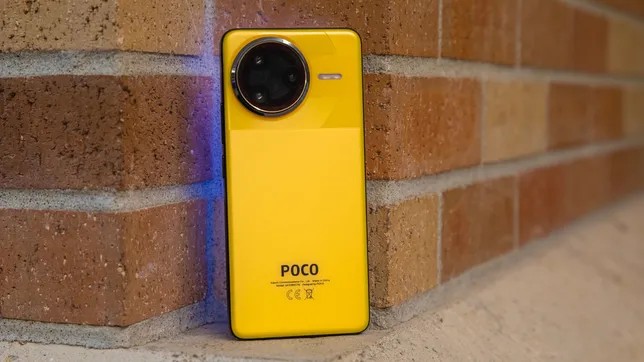
I spent a good chunk of my Christmas morning last week doing something I swore I’d stop doing: debloating a brand new Android phone for a family member. My nephew got a shiny new Redmi—great screen, snappy processor, the works—but out of the box, it felt like a billboard with a touchscreen attached.
And if the rumors about Xiaomi’s 2026 roadmap are true, this headache is about to get a whole lot worse. Or heavier, to be precise.
We’ve been hearing chatter lately that the next iteration of Xiaomi’s software strategy involves rolling out what they call “integrated ecosystem services” (read: bloatware) to absolutely every user tier, from the budget POCOs to the flagship Ultra series. The alarming part isn’t just the ads anymore—it’s the sheer weight of the operating system.
The “Heavy” OS Theory
When I say “heavy,” I’m usually talking about software lag or storage footprint. But looking at where things are headed for 2026, we might need to start taking that word literally.
Think about it.
If an OS comes pre-loaded with unremovable background services, AI agents that constantly scan for context, and a dozen “partner apps” that auto-update in the background, the processor has to work overtime just to keep the UI smooth. The Snapdragon and Dimensity chips in late 2025 are beasts, sure. They can handle the load. But physics is physics.
More processing cycles equal more heat.
To combat that heat, manufacturers have to slap in larger vapor chambers, thicker graphite sheets, and bigger batteries to compensate for the efficiency loss. So, that “software bloat” eventually manifests as physical grams in your pocket. I held my nephew’s new phone next to my Pixel, and the density difference was noticeable. It felt like a brick. A premium brick, but a brick nonetheless.

30GB of “System” Data? Seriously?
Let’s talk about storage for a second because this is where I really lose my patience.
On that Redmi I set up, the “System” partition was eating nearly 36GB right out of the gate. Thirty-six. That’s insane. For context, a clean install of Windows 11 on my laptop doesn’t take up much more than that.
Where is all that space going? It’s not just the OS kernel. It’s the pre-cached assets for the theme store, the localized data for the “Glance” lock screen (which I still contend is the most annoying feature in modern Android history), and the reserved space for these upcoming “ecosystem” features.
If the 2026 roadmap pushes these mandatory installs to every region, we’re going to see base model phones—the 128GB units that are still somehow being sold—become virtually unusable after a year of caching updates. You’ll be fighting for space before you even download your first game.
The “Ecosystem” Trap
I get why they do it. Margins on hardware are razor-thin. Xiaomi famously capped their hardware profit margins years ago, relying on internet services to make the real money. But the balance is shifting too far.
It used to be that you could buy a Xiaomi flagship, spend an hour with ADB (Android Debug Bridge) removing the junk, and end up with a killer device for the price.
But have you tried unlocking the bootloader on HyperOS lately? It’s a nightmare. The community level restrictions, the wait times, the quizzes—it’s clear they don’t want us tinkering anymore. They want that bloatware to stay put because that’s the revenue stream.
I tried to remove the com.miui.msa.global package (the main system ad daemon) on a friend’s Xiaomi 15 earlier this year, and the OS actually threw a warning that removing it would break “core functionality.” It didn’t, obviously. But the scare tactics are getting bolder.
Why 2026 Scares Me
The trend for the coming year seems to be “AI Integration,” which is just marketing speak for “more stuff running in the background that you didn’t ask for.”
If every Xiaomi phone in 2026 is mandated to run local LLMs (Large Language Models) for their smart assistant, plus the usual suite of pre-installed booking apps, streaming services, and payment wallets, the RAM usage is going to skyrocket. We’re already seeing mid-rangers with 12GB of RAM where 6GB is just sitting reserved for the system.
It feels like we’re buying hardware just to service the software’s appetite, rather than the software serving us.
Is It Still Worth It?
Here’s the conflict. The hardware is still so good.
I look at the camera sensors Xiaomi is using—those one-inch Leica-branded sensors are magic. The charging speeds—120W charging that tops up a battery in 19 minutes—changed how I use my phone. From a purely mechanical standpoint, their engineering team is crushing it.
But the software team seems determined to ruin the party.
If the 2026 lineup gets physically heavier to support thermally inefficient, bloated software, and if the user experience gets “heavier” with unremovable apps, the value proposition breaks. I can tolerate a few pre-installed games I can delete. I can’t tolerate a phone that fights me for control of its own file system.
What You Can Do About It
If you’re stuck in this ecosystem or planning to buy in 2026 because the hardware specs are just too tempting, don’t just accept the default setup.
- Use Shizuku + Canta: If you aren’t comfortable with command lines, these apps let you uninstall system apps directly on the device without a PC. It’s a lifesaver.
- Change your region: Oddly enough, switching your phone’s region in settings to a country with stricter privacy laws (like some EU nations or the UK) sometimes disables specific ad components automatically.
- DNS Filtering: Set up a private DNS (like NextDNS) to block the ad servers at the network level. It won’t remove the apps, but it stops them from phoning home and wasting your battery.
I want to love these gadgets. The engineering deserves better than to be suffocated by a heavy, bloated OS. But until Xiaomi decides that user experience is worth more than service revenue, our pockets—and our patience—are going to be carrying the extra weight.