Breaking Barriers: How New Wireless Standards Are Revolutionizing Android Gadgets and Interoperability
The landscape of mobile technology is undergoing a seismic shift, one that promises to dismantle the long-standing walls between competing ecosystems. For years, users have been segregated into distinct camps, primarily defined by the operating system in their pockets. However, recent trends in **Android News** suggest that the era of proprietary isolation is coming to an end. Driven by a combination of regulatory pressures regarding fair competition and the natural evolution of wireless standards, the future of **Android Phones** and their accompanying accessories is looking increasingly universal.
This evolution is not merely about charging ports or app store policies; it strikes at the very core of how devices communicate with one another. We are witnessing a transition where the hardware protocols used for file sharing, device discovery, and smart home connectivity are being standardized. For the consumer, this means the friction associated with using **Android Gadgets** in a mixed-device household is rapidly diminishing. The days of convoluted workarounds to send a high-quality video from a tablet to a phone, or to connect a smart tracker to a different brand of hub, are numbered.
In this comprehensive analysis, we will explore the technical underpinnings of these new wireless standards, how they empower the Android ecosystem, and what this means for the future of cross-platform compatibility. We will delve into the specifics of Wi-Fi standards, the rise of Ultra-Wideband (UWB), and the practical implications for users who want the freedom to choose the best technology regardless of the brand logo on the back.
Section 1: The Technical Convergence of Wireless Protocols
To understand why the future of **Android Gadgets** is so promising, we must first look under the hood at the wireless protocols that facilitate device-to-device communication. Historically, features like instant file sharing were siloed because manufacturers used proprietary implementations of standard technologies. While the underlying radio frequencies (Bluetooth and Wi-Fi) were the same, the “language” the devices spoke was different.
The Role of Neighbor Awareness Networking (NAN)
One of the most critical developments in recent years is the adoption of Neighbor Awareness Networking (NAN), often referred to as Wi-Fi Aware. This technology allows devices running **Android** (and increasingly other operating systems) to discover and communicate with one another directly, without requiring an intermediary access point or an internet connection. Unlike traditional Wi-Fi, which focuses on connecting a client to a router, NAN focuses on peer-to-peer proximity.
In the past, proprietary ecosystems utilized specific, locked-down versions of these discovery protocols to enable features like instant file dropping. However, as global standards bodies and regulations push for interoperability, the industry is aligning around a unified implementation of NAN. This means that an **Android Phone** can theoretically identify a nearby laptop or tablet from a different manufacturer and negotiate a high-speed data transfer channel instantly.
Bluetooth LE and the Handshake Process
Before a high-speed Wi-Fi connection can be established, devices must first “shake hands.” This is typically handled by Bluetooth Low Energy (BLE). The efficiency of BLE advertising packets is what allows your phone to detect a pair of earbuds the moment you open the case. Recent updates in the Android stack have optimized how these advertising packets are broadcasted and scanned.
The convergence here lies in the standardization of the advertisement payload. If the industry moves toward a standardized structure for these BLE packets—driven by the necessity to comply with interoperability mandates—**Android Gadgets** will gain the ability to trigger “pairing” or “sharing” prompts on devices that were previously blind to them. This technical harmonization is the key to a world where a file transfer is just a tap away, regardless of the destination device.
Ultra-Wideband (UWB): The Precision Layer
While Bluetooth handles discovery and Wi-Fi handles data transfer, Ultra-Wideband (UWB) adds a layer of spatial awareness that is transforming the utility of modern smartphones. UWB allows devices to know not just that another device is near, but exactly where it is and in what direction. Top-tier **Android Phones** are now regularly shipping with UWB chips.
This technology is crucial for the next generation of digital car keys and smart home locks. Because UWB is a standard defined by the FiRa Consortium, it is inherently designed for cross-platform use. An Android device can interact with a UWB-enabled lock just as effectively as a competitor’s device, provided the software permissions are in place.
Section 2: The Impact of Regulatory Standards on Android Ecosystems
![Hybrid cloud architecture diagram - Healthcare hybrid cloud architecture [7] | Download Scientific Diagram](https://android-digest.com/wp-content/uploads/2025/12/inline_2beabc67.webp)
The technical capabilities for universal connectivity have existed for some time, but the motivation to implement them openly has often been lacking. This is where the regulatory landscape plays a pivotal role. Recent rulings, particularly in Europe, have forced technology giants to rethink their “walled garden” strategies. The ripple effects of these decisions are creating a golden age for **Android News** enthusiasts and hardware manufacturers.
Democratizing the Hardware Stack
When regulations mandate that core communication features must be interoperable, it forces a shift from proprietary software locks to open hardware standards. For **Android Gadgets**, this is a massive advantage. Android has historically been the more open platform, but it often suffered from being the “outsider” when trying to interact with closed ecosystems.
For example, consider the standardization of Wi-Fi Direct implementations. Previously, a manufacturer might tweak the Wi-Fi driver to only accept file transfer requests from devices with a specific cryptographic signature. Under new interoperability pressures, these drivers must adhere to a standard that accepts authenticated requests from any compliant device. This levels the playing field, allowing high-end Android flagships to flex their hardware muscle without being artificially handicapped by software incompatibility.
Case Study: The Evolution of Quick Share
Google’s rebranding and restructuring of “Nearby Share” into “Quick Share” (in collaboration with Samsung) is a direct response to the need for a unified front. By consolidating the fragmentation within the Android ecosystem itself, Google created a robust competitor to proprietary sharing methods. However, the next step—and the one currently unfolding—is the extension of this protocol.
Imagine a scenario where a graphic designer uses an iPad for drawing but prefers a Samsung Galaxy S24 Ultra for their daily phone due to its camera capabilities. Historically, moving that drawing from the tablet to the phone was a hassle involving cloud drives or emails. With the forced adoption of standard Wi-Fi and Bluetooth discovery protocols, we are moving toward a reality where “Quick Share” could theoretically detect the tablet as a valid recipient, bridging the OS divide purely through standardized local wireless protocols.
The “Gatekeeper” Effect and Consumer Choice
The Digital Markets Act (DMA) and similar regulations classify certain tech giants as “gatekeepers.” By forcing these gatekeepers to open up their core platform services, **Android Phones** gain access to functionalities that were previously exclusive clubs. This goes beyond file sharing; it includes messaging standards (like RCS adoption) and payment chips (NFC access).
For the consumer, this means the choice of smartphone is no longer dictated by peer pressure (“I need to buy Brand X because my family uses it”). Instead, the choice can be based on merit—camera quality, battery life, screen resolution, or form factor (like foldables)—knowing that the device will play nicely with the broader tech environment.
Section 3: Beyond Files – Smart Home and Wearables
While file sharing grabs the headlines, the implications of standardized wireless protocols extend deep into the Internet of Things (IoT). **Android Gadgets** are positioning themselves as the central command centers for the modern smart home, leveraging protocols like Matter and Thread.
Matter: The Great Equalizer
Matter is an open-source connectivity standard for smart home and IoT devices. It is the physical manifestation of the interoperability we discussed in Section 1. Matter runs over Wi-Fi, Ethernet, and Thread (a low-power mesh networking protocol). Android has baked Matter support directly into the OS.
Real-World Scenario:
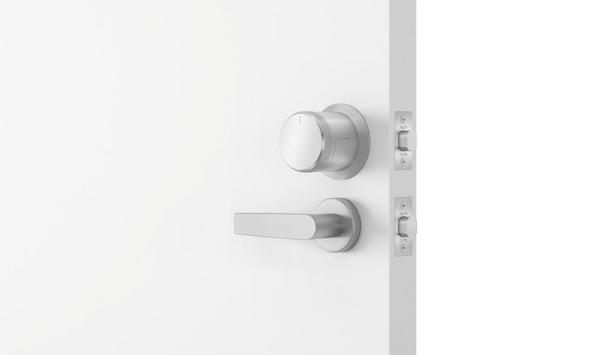
You purchase a smart thermostat that was previously marketed heavily for a competing ecosystem. In the past, setting this up on an Android phone might have required a third-party bridge or a buggy app. With Matter, your Android phone uses standard Bluetooth LE for the handshake and Thread/Wi-Fi for the connection. The setup process is native, instant, and secure. The brand of the thermostat no longer matters; the standard dictates the experience.
Wearables and Health Data Portability
The wearable market has been another stronghold of proprietary tech. Smartwatches often only work fully with the same brand of phone. However, as Bluetooth protocols for health data transmission become more standardized to comply with data portability laws, we are seeing a shift.
Newer **Android Gadgets**, such as smart rings and advanced fitness trackers, are utilizing standard Bluetooth Generic Attribute (GATT) profiles more effectively. This ensures that heart rate, sleep data, and SpO2 levels can be transmitted to any authorized health app, regardless of the OS. This decoupling of hardware from software silos allows users to mix and match—perhaps using an Oura Ring with a Pixel phone, or a Garmin watch with a Xiaomi device—without losing functionality.
Audio Switching and Auracast
Bluetooth LE Audio and Auracast are revolutionizing how we consume sound. Auracast allows a single source (like a TV in a waiting room or a PA system at an airport) to broadcast audio to unlimited headphones nearby. Android was the first major platform to support this natively.
This standard is not owned by any single company. As it proliferates, an Android user can share their music with a friend’s headphones simply by broadcasting via Auracast, regardless of the brand of headphones the friend is wearing. This is the ultimate democratization of media consumption, driven entirely by open standards.
Section 4: Pros, Cons, and Best Practices for the Open Era
As we embrace this new era of connectivity for **Android Phones** and gadgets, it is essential to weigh the benefits against potential risks. Open standards bring convenience, but they also require a new approach to digital hygiene.
The Advantages of Interoperability
- Reduced E-Waste: When accessories work with any phone, users don’t need to discard perfectly good headphones or chargers when they switch brands.
- Cost Efficiency: Competition drives prices down. If any standard printer works with any phone instantly, manufacturers must compete on price and quality, not ecosystem lock-in.
- Innovation Speed: Developers can focus on building great features rather than reverse-engineering proprietary protocols.
The Security Implications
The “Walled Garden” argument has always been one of security. If you control the hardware and the software, you control the entry points. Opening up Wi-Fi and Bluetooth protocols to accept connections from “foreign” devices introduces new attack vectors.
Bluebugging and Ghost Connections:
As devices become more “promiscuous” (technically speaking, meaning they are constantly listening for connection requests), the risk of malicious interactions increases. Attackers could theoretically spam connection requests to drain battery life or attempt to exploit buffer overflows in the wireless stack.
Best Practices for Android Users
To navigate this open landscape safely, users should adopt the following strategies:
- Visibility Management: Keep features like Quick Share set to “Contacts Only” or “Hidden” when not in use. Only switch to “Everyone” for the specific duration of a transfer.
- Update Discipline: Wireless drivers are part of the system firmware. Keeping your Android device updated with the latest monthly security patches is critical, as these often contain fixes for vulnerabilities in the Bluetooth or Wi-Fi stacks.
- Device Verification: When pairing a new device or accepting a file, always verify the cryptographic key or the visual pin code displayed on both screens. Never accept a random prompt from an unknown device in a public space.
Conclusion
The landscape of **Android Gadgets** is being reshaped by a convergence of technology and regulation. We are moving away from a fragmented world of “green bubbles” and incompatible accessories toward a unified digital environment. The adoption of standardized protocols like NAN, UWB, and Matter proves that competition can exist without exclusion.
For the Android user, this is a victory. It validates the platform’s long-standing philosophy of openness and choice. As Wi-Fi standards evolve to support seamless peer-to-peer connections across different operating systems, the smartphone becomes a truly universal tool. Whether it is sharing a photo with a friend, unlocking a car, or controlling a smart home, the barriers are falling. The future of mobile technology is not about which ecosystem you belong to, but how well your devices connect with the world around them—and in that world, Android is poised to lead the charge.