
The Software Divide: Analyzing the Disparity in Gboard and AI Experience Across Android Phones
The Android ecosystem has long been celebrated for its diversity. From the utilitarian budget devices to the bleeding-edge foldables, the sheer variety of Android Phones available to consumers is the platform’s greatest strength. However, this diversity comes with a hidden cost: fragmentation. While historically, fragmentation referred to differing operating system versions, a new, more subtle form of disparity has emerged. It is no longer just about who has the latest version of Android; it is about the quality of the service integration, specifically regarding input methods like Gboard and the emerging dominance of AI assistants like Gemini.
For years, enthusiasts following Android News have noticed a distinct “Pixel Privilege.” This refers to the phenomenon where Google’s own services run significantly smoother, faster, and more intelligently on their proprietary hardware compared to devices from Samsung, Xiaomi, OnePlus, or Motorola. While hardware specifications on non-Pixel flagships often eclipse Google’s offerings, the software cohesiveness—particularly in text input and voice dictation—often lags behind. This article delves deep into the technical and practical reasons behind this inconsistency, exploring why essential tools like Gboard and voice dictation behave differently across the ecosystem and what it means for the future of Android Gadgets.
Section 1: The “Pixel First” Ecosystem and Input Optimization
To understand why the typing and dictation experience varies so wildly, we must first look at how Google approaches software development for its own devices versus the broader Android platform. The Google Pixel series serves as the reference implementation for Android, but it is also a vessel for proprietary software features that rely on specific hardware integration.
The Tensor Advantage and On-Device Processing
Since the introduction of the Google Tensor chipset, Google has pivoted heavily toward on-device machine learning (ML). This shift is most evident in Gboard and voice dictation. On a Pixel device, the “Assistant Voice Typing” feature processes speech directly on the phone’s Neural Processing Unit (NPU). This results in near-instantaneous transcription, the ability to insert punctuation automatically, and the capability to execute commands (like “Send” or “Delete”) without a data connection.
On non-Pixel Android Phones, even those with powerful Snapdragon or MediaTek processors, Gboard often defaults to the legacy “Google Voice Typing.” While still effective, this version frequently relies on server-side processing. This introduces latency—a split-second delay between speaking and seeing text appear—and often lacks the context-aware punctuation and command integration found on Google’s own hardware. The disparity is not necessarily due to a lack of raw power in competitor devices, but rather a lack of deep software-to-hardware optimization for Google’s specific ML models.
Haptics and the tactile Experience
Another area where the experience diverges is in haptic feedback. Gboard on a Pixel is tuned to interact seamlessly with the device’s linear resonant actuator (LRA). The vibration is crisp, tight, and mimics the feel of a physical keypress. This is achieved through deep system-level access where the input method editor (IME) communicates directly with the haptic driver.
On other devices, Gboard must rely on the standard Android haptic APIs, which are interpreted differently by every manufacturer’s skin (like Samsung’s One UI or OPPO’s ColorOS). Often, this results in a “mushy” or buzzing sensation rather than a crisp click, or worse, a slight latency between the touch and the vibration. This disconnect breaks the illusion of physical typing and contributes to the perception that Gboard is “worse” on non-Google hardware, even if the app version is identical.
Section 2: The Friction of OEM Customization
The beauty of Android lies in customization, but when Original Equipment Manufacturers (OEMs) layer their own software on top of the core OS, it often creates friction with Google’s universal apps. This section analyzes how these “skins” impact the performance of Gboard and Gemini.
Resource Management and aggressive Killing
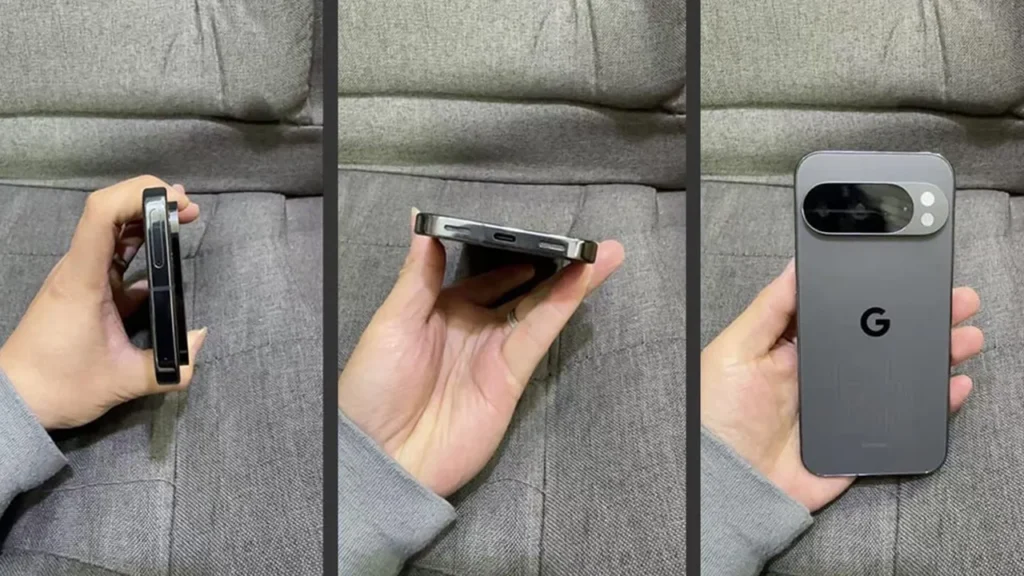
One of the most significant technical hurdles for Android Phones manufactured by third parties is aggressive background process management. Brands like Samsung and Xiaomi are notorious for their strict battery optimization protocols. To extend battery life, these operating systems often kill background services or throttle their CPU access.
Gboard and the Google App (which powers Gemini and voice dictation) rely on persistent background services to learn user habits and maintain a “hot word” readiness. When an OEM skin aggressively hibernates these services, the user experiences a “cold start” every time they open the keyboard or trigger the assistant. This manifests as:
- Keyboard Lag: A noticeable stutter when the keyboard first pops up.
- Dictation Delay: A spinning circle or a “Initializing…” message when tapping the microphone icon.
- Missed Inputs: The first few letters of a sentence failing to register.
The Battle of Defaults: Duplicate Ecosystems
Another layer of complexity is the existence of duplicate ecosystems. Samsung, for instance, invests heavily in the Samsung Keyboard and Bixby. Consequently, One UI is optimized to prioritize these native apps. The Samsung Keyboard has direct access to the system’s clipboard manager and theme engine in a way Gboard does not.
When a user installs Gboard on a Galaxy device, they are essentially running a guest application. It does not have the same “root” level privileges or priority access to the touch sampling rate that the native keyboard enjoys. This can lead to subtle issues like “ghost touches” or reduced swipe accuracy. Furthermore, the integration of Gemini as a voice assistant often conflicts with the hard-coded Bixby wake locks, leading to a scenario where the phone struggles to decide which microphone service to prioritize, causing dictation to fail or time out.
Case Study: The Foldable Form Factor
The disparity is even more pronounced in the growing market of foldable Android Gadgets. Google optimizes Gboard for the Pixel Fold with split-keyboard layouts and drag-and-drop functionality that feels native. However, on foldables from other brands, Gboard sometimes struggles to detect the screen state correctly, failing to split in landscape mode or displaying incorrect aspect ratios. This forces users to rely on the OEM’s stock keyboard, which may offer better layout compatibility but inferior prediction and correction algorithms.
Section 3: Implications of the AI Era and Gemini
As we move deeper into the AI era, the gap between Pixel and non-Pixel Android Phones threatens to widen. Google’s Gemini is set to replace the traditional Google Assistant, bringing Large Language Model (LLM) capabilities to the palm of your hand. However, the implementation of Gemini highlights a critical fragmentation issue.
The Nano Implementation
Google has introduced “Gemini Nano,” a version of their AI model designed to run locally on mobile devices. Currently, the deployment of Nano is highly fragmented. While the latest Pixel devices ship with Nano integrated into the Android AI Core, other flagships are often left waiting for updates or are forced to rely on the cloud-based version of Gemini.
For the end-user, this difference is palpable. Cloud-based dictation and AI interaction are subject to network stability. If you are in a subway or an area with spotty 5G, Gemini on a non-Pixel phone may become unresponsive or slow. In contrast, a device with properly integrated on-device AI can handle voice-to-text, summarization, and smart replies locally. This creates a two-tier class system within Android: those with “Real-Time” AI and those with “Buffered” AI.
Voice Dictation as the Primary Interface
Voice is rapidly becoming the primary interface for computing. The issues with Gboard and Gemini on non-Pixel phones are not just minor annoyances; they represent a breakdown in the fundamental user interface. If a user cannot trust their phone to accurately and quickly transcribe a text message while driving or walking, they lose faith in the platform.
The current state of Android News suggests that while OEMs are racing to add AI features (like Samsung’s Galaxy AI), they are often building parallel solutions rather than optimizing the Google solutions users are accustomed to. This leads to a disjointed experience where a user might use Gemini for search, but Samsung’s voice engine for keyboard dictation, resulting in inconsistent punctuation, distinct voice profiles, and varying levels of accuracy.
Section 4: Recommendations and Best Practices
While the systemic issues require cooperation between Google and OEMs to fix, users of non-Pixel devices are not entirely helpless. There are several strategies to bridge the gap and improve the Gboard and dictation experience on third-party hardware.
Optimizing Gboard on Non-Pixel Phones
If you are experiencing lag or poor dictation on a Samsung, OnePlus, or Xiaomi device, consider the following technical adjustments:
- Disable Battery Optimization: Navigate to Settings > Apps > Gboard > Battery and set it to “Unrestricted.” Do the same for the “Google” app. This prevents the OEM skin from killing the background processes required for instant voice typing.
- Adjust Pointer Speed/Touch Sensitivity: Many OEMs offer settings to increase touch sensitivity (often meant for screen protectors). Enabling this can sometimes mitigate the latency felt in third-party keyboards.
- Clear Cache Partition: After major OS updates, old cache files can conflict with Gboard’s operation. Booting into recovery mode and clearing the cache partition can restore snappiness.
- Haptic Tuning: In Gboard settings, go to Preferences > Vibration strength on keypress. Instead of using “System default,” manually set a millisecond value (e.g., 5ms to 10ms). This overrides the generic system interpretation and forces a specific vibration duration, often resulting in a crisper feel.
Choosing the Right Device for Your Needs
When shopping for new Android Phones, consumers must weigh the trade-offs.
The Pixel Proposition:
Pros: Best-in-class voice dictation, seamless Gboard integration, immediate access to latest AI features, consistent UI.
Cons: Hardware (modems, battery life, raw benchmark scores) often trails behind top-tier competitors.
The Third-Party Flagship Proposition:
Pros: Superior hardware build, faster charging, brighter screens, more raw processing power.
Cons: Software friction with Google apps, duplicate services, potential for delayed notifications or keyboard lag due to aggressive battery management.
The Developer Perspective
For developers, this fragmentation necessitates rigorous testing. An app that utilizes voice input APIs might behave perfectly on a Pixel emulator but fail gracefully on a Xiaomi device due to aggressive microphone permission handling. Developers must account for these variations by implementing robust fallback mechanisms when the primary speech recognition service is unavailable or throttled.
Conclusion
The disparity in the Gboard and Gemini experience across the Android ecosystem serves as a microcosm of the platform’s broader challenges. While Android’s “open” nature allows for incredible hardware innovation, it also creates an environment where core software experiences can feel inconsistent. The “Pixel Privilege” is real, not necessarily because Google is maliciously withholding features, but because vertical integration—controlling both the hardware and the software—inherently yields better optimization.
For the general consumer, this means that the “best” phone is subjective. If your workflow relies heavily on voice dictation, smart replies, and AI integration, the software optimization of a Pixel may outweigh the hardware superiority of its competitors. However, for the ecosystem to truly thrive, Google and its OEM partners must find a way to standardize these core experiences. A keyboard and a voice assistant are no longer just apps; they are the fundamental layers through which we interact with the digital world. Ensuring they work flawlessly, regardless of the brand logo on the back of the phone, is essential for the future of Android.