The Two Androids: Why Price Defines Experience in 2025
Let’s stop pretending that “Android” is a single operating system. It isn’t.
I’ve been arguing this with my tech circle for months, and now that we are closing out 2025, the divide is more glaring than ever. When someone asks me, “Is Android better than iOS?” my immediate response is, “Which Android?”
Because the operating system running on a $1,200 Samsung Galaxy S25 Ultra or a Pixel 10 Pro is fundamentally not the same beast as the one running on a $150 budget handset you pick up at a prepaid carrier store. They might share a kernel, and they might both run the Play Store, but the user psychology, the app ecosystem, and the monetization models are completely totally different.
We are looking at a class system within a mobile OS, and understanding this is critical whether you are a developer, a marketer, or just someone trying to buy a decent phone for your parents.
The $100 Trap: You Are the Product
I recently set up a budget Android phone for a relative. It cost about $130. The hardware was surprisingly decent—screens have gotten so cheap that even low-end devices look sharp. But the moment I turned it on, I felt the difference.
On a budget device, the phone itself is a vehicle for advertising. During the setup process, I had to uncheck six different boxes trying to install “partner apps” (bloatware). Once we got to the home screen, the weather app had banner ads. The system cleaner app had full-screen pop-ups.
This brings me to the economics of the platform. There is a brutal reality that developers and advertisers know: people who buy $100 phones generally do not pay for software.
If I release an app today that costs $5 upfront or requires a $39 annual subscription, I am wasting my time targeting the budget demographic. The conversion rate is near zero. The user who is budget-conscious enough to compromise on hardware is likely not going to drop 30% of the phone’s value on a single utility app.
So, what happens? Developers flood the low-end market with “free” apps that are absolutely aggressive with data harvesting and ad serving. If you use a budget Android phone in 2025, you are subjected to a completely different internet than someone on a flagship. You see more ads, you deal with more aggressive tracking, and the apps you use are less optimized because the developers are prioritizing ad impressions over user experience.
The Flagship Experience: A Different World
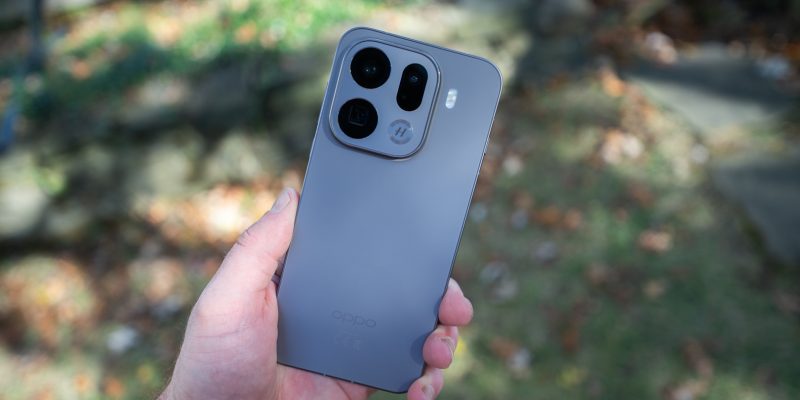
Now, compare that to my daily driver, a current-gen flagship. When I paid a premium for this device, I wasn’t just paying for the Snapdragon 8 Gen 4 (or whatever silicon is inside); I was paying for silence.
High-end Android is becoming increasingly similar to the “walled garden” approach we see from competitors. Samsung, Google, and even Sony focus on ecosystem retention. If you own a high-end device, you are a high-value target.
Advertisers treat you differently here. If I browse Instagram or TikTok on a high-end Android, the algorithm feeds me ads for luxury travel, high-end tech accessories, or subscription services. They know I have the hardware—and the wallet—to support paid apps.
This creates a self-fulfilling cycle. Developers build the “pro” features for the high-end phones first. I remember when Sony launched the Xperia Z2 years ago. It was one of the first mainstream phones to push waterproofing as a core feature. Back then, it was a novelty for the premium sector. Today, if you buy a flagship, IP68 water resistance is the bare minimum expectation. But if you buy a budget phone? You might still be out of luck if you drop it in the sink.
The apps follow the hardware. High-performance games, advanced video editing suites, and the new wave of on-device AI agents we’ve seen explode throughout 2025 only really work on the top-tier silicon. If you have the budget phone, the Play Store might let you download the app, but it will crash, stutter, or disable features.
The Developer’s Dilemma
I dabble in app development, and I talk to full-time devs constantly. The fragmentation of Android is a nightmare, but not for the reasons people usually cite (screen sizes). It’s about performance capabilities and user intent.
When a developer builds a niche tool—let’s say a specialized camera app or a productivity suite—they have to decide who they are building for.
If they build for the high-end (targeting the latest Pixel or Galaxy), they can charge money. They can use heavy APIs for image processing. They can assume the user has 12GB or 16GB of RAM.
But if they want mass adoption, they have to support the $100 devices. This means stripping out features, lowering graphical fidelity, and switching the monetization model from “pay once” to “watch this 30-second video to unlock this feature.”
I’ve seen apps that literally have two different codebases or distinct behaviors based on the device ID. If the app detects a high-end model, it offers a clean, subscription-based UI. If it detects a low-end model, it serves the ad-supported version.
This is why the “Android vs. iOS” revenue debate is always skewed. iOS users generally spend more, yes. But *high-end* Android users spend heavily too. The data just gets diluted by the millions of budget devices that generate zero direct revenue for developers.
The Longevity Problem
Here is another angle that frustrates me about the budget market in 2025: the software lifespan.
We have finally reached a point where major manufacturers are promising 7 years of OS updates for their flagships. This is fantastic. It means my phone from 2025 will still be secure and functional in 2030.
But look at the sub-$200 market. You are lucky to get one major OS update and maybe two years of security patches.
This creates a security poverty trap. People who can’t afford better phones are left with devices that become vulnerable to exploits much faster. I see this all the time with friends who insist on buying cheap phones to “save money,” only to have banking apps stop working two years later because their Android security patch level is too old.
I always tell people: buying a two-year-old flagship is infinitely better than buying a brand-new budget phone.
If you buy a used Galaxy S23 or S24 today, you are getting better build quality, better cameras, and likely better remaining software support than a brand new A-series or budget Moto launched this morning. You also get access to that “premium” tier of the app store economy where things actually work.
The Sony Lesson and Niche Hardware
I mentioned the Sony Xperia Z2 earlier, and I think Sony’s trajectory is actually a great case study for where Android is going. Sony realized years ago they couldn’t compete in the budget wars. They stopped trying to sell cheap phones.
Instead, they pivoted entirely to the high-end, niche market. They make expensive phones for photographers and audiophiles. They charge a premium, and they don’t bloat the software with junk because they know their audience won’t tolerate it.
This is the future of profitable Android phones. We are seeing more manufacturers realizing that the “race to the bottom” is a losing game. The margins on a $100 phone are razor-thin, and the only way to make profit is to sell the user’s data or pre-install garbage software.
What This Means for You
If you are reading this and looking to buy a phone in late 2025 or early 2026, you need to be honest about what you are buying.
If you buy a budget Android, understand that you are entering an ecosystem designed to monetize your attention, not your wallet. You will pay with your time, your data, and your patience.
If you opt for the high-end, you are entering a workspace. It’s cleaner, faster, and respects you more, but the entry fee is steep.
I personally cannot go back to the budget tier. Once you get used to apps that don’t lag, a camera that opens instantly, and an operating system that doesn’t try to sell you credit repair services in the notification shade, it’s impossible to downgrade.
The gap is widening. With the massive push toward on-device AI that we’ve seen this year, the hardware requirements are spiking again. The “AI Eraser” tools and real-time translation features require NPU power that cheap chips just don’t have.
By mid-2026, I expect we will see a hard line in the sand: “AI-Capable” Androids and “Basic” Androids. The Basic phones will essentially become dumb terminals for web browsing and light apps, while the AI-Capable ones will act as personal assistants.
So, when you see an ad for a cheap Android phone, just remember the old adage: If it seems too cheap to be true, check the software. That is usually where they hid the cost.
My Recommendation for 2026
If you are on a strict budget, do not buy new low-end e-waste. Go to a reputable refurbisher. Pick up a flagship from 2023 or 2024. The battery might have a little wear, but the experience will be superior in every single way. You get the waterproofing, you get the good haptics, and most importantly, you get treated like a customer rather than a product.
Android is a fantastic platform, arguably the most versatile one we have. But you have to pay the admission price to see the good parts. Don’t let the budget bin fool you into thinking the whole ecosystem is broken—you just might be looking at the wrong side of the tracks.