
Why I Finally Ditched Glossy Screens for Matte
My eyes are tired. Are yours?
I’m writing this at 11:30 PM. Usually, by this time of night, my eyes feel like they’ve been scrubbed with sandpaper. It’s the blue light, sure, but it’s also the glare. For the last decade, we’ve all been carrying around highly polished mirrors in our pockets, trying to read text through our own reflections. It’s exhausting.
I didn’t realize how much I hated glossy OLED panels until I picked up the TCL NXTPAPER 70 Pro last week.
I know, I know. TCL isn’t usually the first name you grab when you’re looking for a daily driver. You probably think of TVs first. But while everyone else was fighting the brightness wars—pushing 4,000 nits just so you can see a text message on a sunny day—TCL went the other direction. They just made the screen matte.
And honestly? It’s the most practical hardware change I’ve seen in Android land since we got rid of the physical home button.
It’s not just a screen protector
Let’s get this out of the way immediately because I know what you’re thinking. “Can’t I just slap a matte screen protector on my Pixel and call it a day?”
You can. I’ve done it. It sucks.
Plastic matte protectors add this weird, rainbow-colored graininess to the image—technically called “sparkle”—that makes white backgrounds look like they’re covered in grease. It ruins the sharpness. The NXTPAPER 70 Pro isn’t doing that. The matte texture is etched directly into the glass at a nano-level.
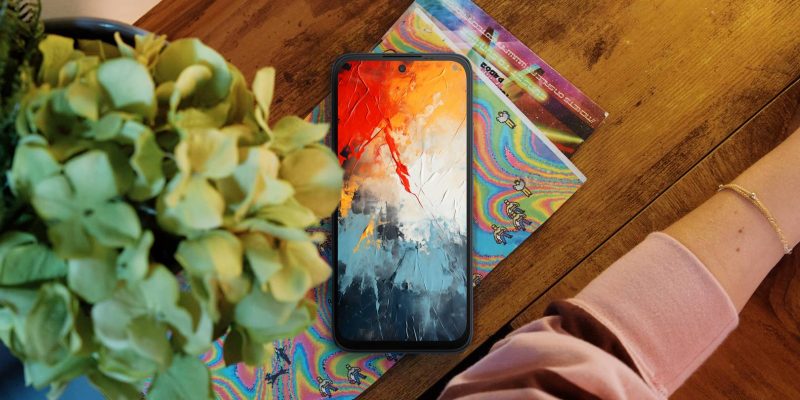
The difference is wild. When you run your thumb over it, it doesn’t stick or smudge like glossy glass. It has a dry, paper-like resistance. It sounds weird, but swiping through Android 16 feels… tactile. Like turning a page in a physical book.
The Outdoor Test
Here is a scenario that drives me up the wall: trying to take a photo or read a map while standing outside at noon. On a normal phone, you’re basically fighting the sun. You crank the brightness to max, your phone heats up within three minutes, the battery tanks, and you’re still squinting at your own silhouette reflected in the Gorilla Glass.
I took the 70 Pro to a coffee shop patio yesterday. Direct sunlight.
I didn’t have to max out the brightness. I could just see the screen.
Because the display diffuses light instead of reflecting it, glare just turns into a soft, white haze rather than a hard beam of light blinding you. It’s incredibly calming. I sat there for an hour reading a long-form article without feeling that familiar tension behind my eyes. It felt like reading a Kindle, but with a 120Hz refresh rate and full color.
Android 16 plays nice with paper
We need to talk about the software for a second. Android 16 has been out for a bit now, and one of the under-the-radar features was better support for non-standard display types.
TCL has hooked into this beautifully. There’s a physical switch on the side of the phone—yes, a hardware switch, thank god—that throws the UI into “Max Ink Mode.”
It doesn’t just turn the screen black and white. It shifts the contrast and gamma to mimic e-ink displays. The icons flatten out. The battery consumption drops off a cliff (in a good way). I spent an entire Sunday using the phone strictly in this mode for reading and replying to texts, and I finished the day with 65% battery left. That is absurd.
The Trade-off (Because there is always one)
Look, I’m not going to lie to you and say this is perfect for everyone. If you are the type of person who watches 4K HDR movies on your phone and obsesses over “inky deep blacks” and neon-popping colors, you might hate this.
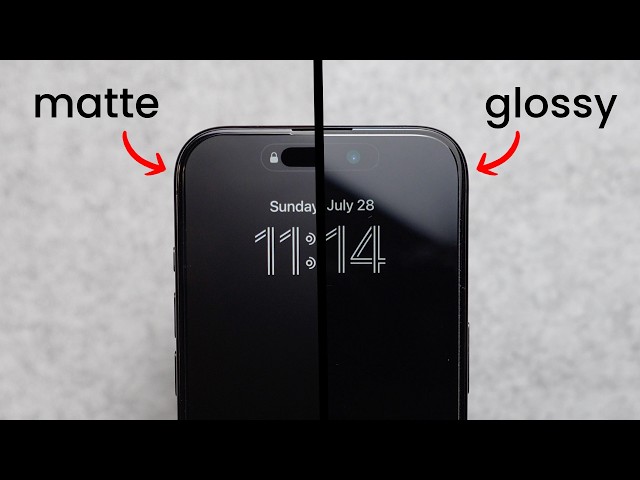
Matte screens diffuse light coming out of the display too, not just light hitting it. That means:
- Colors look a bit more pastel and less saturated.
- Blacks look more like dark charcoal gray.
- Everything has a softer, slightly flatter look.
When I first fired up a YouTube video, I thought, “Oh, it looks a bit washed out.” But then my eyes adjusted. Ten minutes later, I realized I preferred the softer look. It’s less aggressive. It doesn’t feel like the phone is screaming photons into my retinas.
Why aren’t more companies doing this?
This is the question that’s been bugging me all week. Why is gloss the default?
I suspect it’s because gloss looks better in a showroom. When you walk into a store, the glossy OLEDs look like jewelry. They sparkle. They have infinite contrast. The matte phone sitting next to them looks a bit duller, a bit more utilitarian.
But we don’t live in showrooms. We live in offices with overhead fluorescent lights that glare off our screens. We live in parks with sunlight. We live in bed with lamps reflecting off the glass.
TCL is aiming this thing at a specific crowd—readers, students, and people like me who are just tired of digital eye strain. But honestly, after using it, I think this should be a standard option for every flagship. Imagine if Samsung let you choose: S26 Ultra Glossy or S26 Ultra Matte.
I’d pick the matte every single time.
Should you actually buy it?
The NXTPAPER 70 Pro isn’t the most powerful phone on the market. The camera is decent, not world-beating. The processor is snappy enough for Android 16 but it’s not going to set benchmark records.
But it’s the first phone in years that I’ve actually enjoyed using for long periods. Not just tolerated—enjoyed.
If your phone is primarily a media consumption device for Netflix and heavy gaming, stick to the glossy OLEDs. You want that contrast. But if your phone is a tool for reading, emailing, browsing, and navigating the world? This screen tech is a massive quality-of-life upgrade.
My eyes have stopped hurting at night. That alone is worth the price of admission.