
The Great Unification: How Standardization is Revolutionizing Android Gadgets and Cross-Platform Compatibility
Introduction
For over a decade, the consumer electronics industry has been defined by a stark divide. On one side stood the open, diverse ecosystem of Android phones and devices; on the other, a meticulously curated, closed ecosystem often referred to as a “walled garden.” This separation dictated everything from the cables we carried in our bags to the social friction of “green bubbles” and the inability to easily share files between operating systems. However, the landscape of Android gadgets is currently undergoing a seismic shift. Driven by a combination of global regulatory pressures and the inevitable march of technological standardization, the walls are beginning to crumble.
The era of proprietary connectors and exclusive wireless protocols is rapidly fading. We are entering a new phase of interoperability where hardware and software standards are forcing tech giants to play by the same rules. This transition is not merely about convenience; it represents a fundamental change in how devices communicate, charge, and integrate into our lives. For the Android ecosystem, this is a monumental victory. The flexibility that has always been the hallmark of Android is now becoming the industry standard, validating the platform’s long-standing approach to open connectivity.
In this comprehensive analysis, we will explore how new standards in charging, wireless communication, and smart home protocols are reshaping the market. We will delve into the technical underpinnings of these changes—from USB-C Power Delivery to Wi-Fi Aware—and examine what this means for the future of Android news, device development, and consumer choice.
Section 1: The Hardware Convergence – USB-C and the End of Cable Clutter
The Universal Connector: More Than Just a Shape
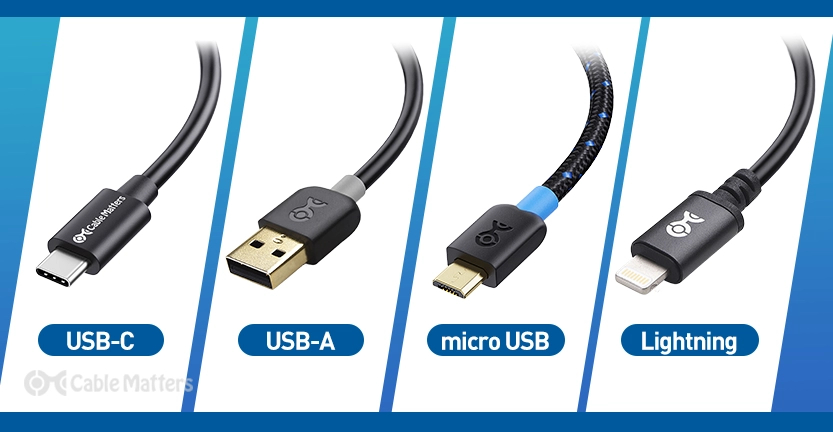
The most visible manifestation of this unification is the absolute dominance of USB-C. While Android phones adopted this standard years ago, transitioning away from Micro-USB to offer reversible charging and faster data speeds, the rest of the industry has finally been forced to catch up. This convergence is largely due to regulatory mandates requiring a common charging port for mobile devices to reduce electronic waste.
However, for the Android enthusiast, USB-C is far more than just a convenient charging plug. It is a powerful interface that unlocks the true potential of Android gadgets. The standardization implies that a single high-quality cable can now charge a flagship Android handset, a laptop, a tablet, and wireless earbuds. But the technical benefits go deeper than physical compatibility.
Power Delivery (PD) and Programmable Power Supply (PPS)
The unification around USB-C has accelerated the adoption of universal charging protocols. In the past, proprietary fast-charging standards (like Qualcomm Quick Charge or various OEM-specific “Warp” or “Super” charges) fragmented the market. Today, the industry is coalescing around USB Power Delivery (USB-PD) and Programmable Power Supply (PPS).
Technical Insight: USB-PD allows devices to negotiate voltage and current levels with the charger. A modern Android phone might request 9V at 2A for 18W charging, while a laptop requests 20V at 3A for 60W charging—all from the same brick. PPS takes this a step further by allowing the voltage to fluctuate in minute increments (e.g., 20mV steps), reducing heat generation and improving battery longevity. As competitors adopt these open standards, the market for third-party accessories explodes with high-quality, universal options.
The Peripheral Renaissance
With the universal adoption of USB-C, Android gadgets have gained access to a wider array of peripherals that were previously segmented.
- Audio: The move to USB-C audio means that high-fidelity DACs (Digital-to-Analog Converters) and dongles are now universally compatible. An audiophile can use the same high-end USB-C headphones on their Android device as they do on their laptop or tablet.
- Video Output: Many high-end Android devices support DisplayPort Alt Mode over USB-C. This allows users to plug their phone directly into a monitor to mirror their screen or, in the case of desktop modes like Samsung DeX or Motorola Ready For, transform their phone into a desktop computer.
- Storage: NVMe SSD enclosures with USB-C interfaces offer transfer speeds of up to 10Gbps or even 20Gbps, allowing content creators to edit video directly off external drives attached to their Android tablets or phones.
Artificial intelligence analyzing image – Convergence of artificial intelligence with social media: A …
Section 2: Breaking the Wireless Walls – File Sharing and Communication
The Evolution of Wireless Protocols
Perhaps the most frustrating barrier between ecosystems has been the inability to seamlessly transfer files wirelessly. While Android users have enjoyed various iterations of sharing (from Android Beam to Nearby Share and now Quick Share), cross-platform sharing was non-existent without third-party apps. However, recent developments in Android news highlight a shift toward standardized wireless protocols that may finally bridge this gap.
The industry is moving toward adopting standardized Wi-Fi Alliance specifications, specifically Wi-Fi Aware (also known as Neighbor Awareness Networking or NAN). This technology allows devices to discover and communicate with one another directly without requiring an internet connection or a traditional Wi-Fi access point. It operates in the background, sending small “heartbeat” messages to find nearby devices.
How Standardization Enables Interoperability
Historically, proprietary protocols like AirDrop utilized a specific combination of Bluetooth for discovery and point-to-point Wi-Fi for transfer. Because the handshake protocols were closed-source, Android devices couldn’t participate. However, as regulations push for interoperability and “gatekeeper” companies are forced to open up their operating systems, we are seeing a pivot toward universal standards.
If all major operating systems implement the standard Wi-Fi Aware and Wi-Fi Direct protocols strictly according to the Wi-Fi Alliance specifications, the theoretical barrier to cross-platform file sharing dissolves. This means a future where an Android phone could potentially appear in the sharing menu of a competitor’s device is not just a dream, but a technical inevitability. This reduces the social friction of owning an Android device in a mixed-ecosystem household or workplace.
RCS: The Democratization of Messaging
Parallel to file sharing is the revolution in text messaging. For years, SMS was the lowest common denominator—a relic of the 1990s that compressed images and lacked read receipts. The adoption of Rich Communication Services (RCS) is the software equivalent of the USB-C hardware revolution.
RCS is an open standard supported by the GSMA. It brings modern messaging features—high-resolution media, typing indicators, read receipts, and better group chat management—to the default messaging apps of Android phones. Crucially, as regulatory pressure mounts on competitors to support GSMA standards, RCS is becoming the universal language of mobile communication. This ensures that Android users are no longer penalized with pixelated videos or broken group chats simply for communicating with users on other platforms.
Section 3: The Smart Home and Wearables – A Unified Ecosystem
Matter: The Esperanto of Smart Home Gadgets
The fragmentation of the smart home market has been a significant pain point for consumers. Buying a smart bulb often meant checking the box to see if it worked with Google Home, Amazon Alexa, or other proprietary hubs. This changed with the introduction of Matter, a unifying standard that is reshaping the landscape of Android gadgets.
Matter is an IP-based connectivity protocol that allows smart home devices to communicate locally, regardless of the manufacturer. It uses Thread (a low-power mesh networking protocol) and Wi-Fi. Because Android has baked Matter support directly into the OS, any modern Android phone can serve as a commissioning device for Matter products.
Artificial intelligence analyzing image – Artificial Intelligence Tags – SubmitShop
Real-World Scenario: Imagine a household with mixed devices. Previously, a smart lock might only work with one ecosystem. With Matter, an Android user can control the lock, view its status, and include it in automation routines, even if the lock was originally purchased for a different ecosystem. This decouples the hardware from the controller, giving Android users access to premium smart home hardware that was previously exclusive to other platforms.
Wearables and Health Data Portability
The wearable sector is also seeing a push toward standardization, though it moves slower than the smart home. Google’s Wear OS has seen a resurgence, driven by closer partnerships with Samsung and the integration of Fitbit’s health algorithms. The key innovation here is Health Connect.
Health Connect is an Android API that acts as an intermediary for health data. It allows different apps to read and write data to a shared on-device database. This means a user can track their run with a Garmin watch, track their sleep with an Oura ring, and view all that data comprehensively in Google Fit or Samsung Health. This interoperability is crucial for Android gadgets, as it prevents data lock-in. Users are free to switch hardware manufacturers without losing years of historical health data, a freedom often restricted in closed ecosystems.
The Impact of “Find My” Device Networks
Another area of standardization is the expansion of “Find My” device networks. Google has revamped its Find My Device network to utilize billions of Android devices to locate lost items via Bluetooth proximity. Crucially, the industry (including Apple and Google) collaborated on a specification to detect unwanted location trackers. This cross-platform safety standard ensures that an Android user will be alerted if a competitor’s tracker is moving with them, and vice versa. This cooperation on safety standards paves the way for broader compatibility in asset tracking tags.
Section 4: Implications, Pros, and Cons
The Pros: Consumer Empowerment
Artificial intelligence analyzing image – Artificial intelligence in healthcare: A bibliometric analysis …
The shift toward standardization offers immense benefits for the consumer:
- Cost Efficiency: Users no longer need to buy multiple sets of cables or ecosystem-specific accessories. A high-quality USB-C charger is a universal investment.
- Reduced E-Waste: Interoperability extends the lifespan of devices. A charger from an old phone works with a new one; a smart bulb survives a switch from one voice assistant to another.
- Freedom of Choice: When hardware isn’t locked to a specific OS, consumers can choose the best Android phone for their needs without worrying about losing compatibility with their expensive headphones or smart home gear.
The Cons: The Risk of Homogenization
However, there are potential downsides to this unification:
- Innovation Stagnation: One argument against regulation-enforced standards is that they can stifle innovation. If a company invents a superior charging method but is legally forced to use USB-C, that innovation may never reach the market.
- Security Vectors: Open standards, while generally secure, are public. If a vulnerability is found in a protocol like Wi-Fi Aware or the USB-PD handshake, it affects the entire industry, not just one manufacturer.
- Lowest Common Denominator: Sometimes, standards are built on compromise. Cross-platform file sharing might not be as fast or feature-rich as a proprietary solution designed for specific hardware.
Recommendations for the Modern Android User
In this new era of Android gadgets, purchasing decisions should be strategic.
1. Check the Specs, Not Just the Shape: Just because a cable is USB-C doesn’t mean it supports high speeds. Look for cables rated for “USB 3.2 Gen 2” (10Gbps) and “100W PD” to ensure future-proofing.
2. Look for the Matter Logo: When buying smart plugs, lights, or thermostats, insist on Matter compatibility. This ensures your investment is safe regardless of which phone you use in five years.
3. Embrace Quick Share: If you haven’t already, familiarize yourself with Quick Share on Windows and Android. It is rapidly becoming the universal standard for PC-to-phone transfer, replacing the need for clunky cables or third-party cloud drops.
Conclusion
The landscape of consumer electronics is witnessing a historical pivot. We are moving away from the “walled garden” philosophy that defined the smartphone wars of the 2010s and toward an era of “fenced pastures”—distinct ecosystems that are nonetheless connected by universal gates. For fans of Android phones and the broader ecosystem, this is a validation of the platform’s open nature.
Regulatory pressures and the undeniable logic of standardization have forced the industry to adopt technologies that Android has championed for years, such as USB-C and RCS. Furthermore, the opening of wireless protocols promises a future where an Android device can interact seamlessly with any other piece of technology, regardless of the logo on the back. As these barriers fall, the focus shifts from “Will this work with my phone?” to “Which phone offers the best experience?”—a question that Android gadgets are increasingly well-positioned to answer.